

drones, drips and data dissonance
a Cannes Lions scene report, brought to you by Side Projects


Hello from the Riviera! This is Clara Malley and Eli Williams. We co-run Side Projects, the newly-launched editorial R&D arm of Day One Agency. In addition to our Substack, we also have a podcast and print issue (a few copies are still available on our site), as well as strategy and cultural R&D projects for clients.
We are big fans of as seen on, and are excited to bring you three special editions over the course of this week, covering what we’re seeing and hearing as we make our way around the Cannes Lions Festival. It’s ostensibly a five-day networking event/awards show celebrating “creativity, effectiveness and innovation in the global advertising, marketing and communication industries.” In recent years, it’s evolved into a potpourri of creators, celebrities, athletes, media and tech execs—all eagerly jockeying for advertising dollars and mindshare supremacy. Let’s get into it.
A Ciroc Cituation
Ciroc Athletic Club, a new activation this year, offers pickleball matches (see here), massages, supplements, B12 shots—and IV drips. I went with truly every intention of getting one. But as my friend/co-worker/on-the-go podcast producer Reid and I sat waiting to get hooked up, we noticed some alarming reactions.
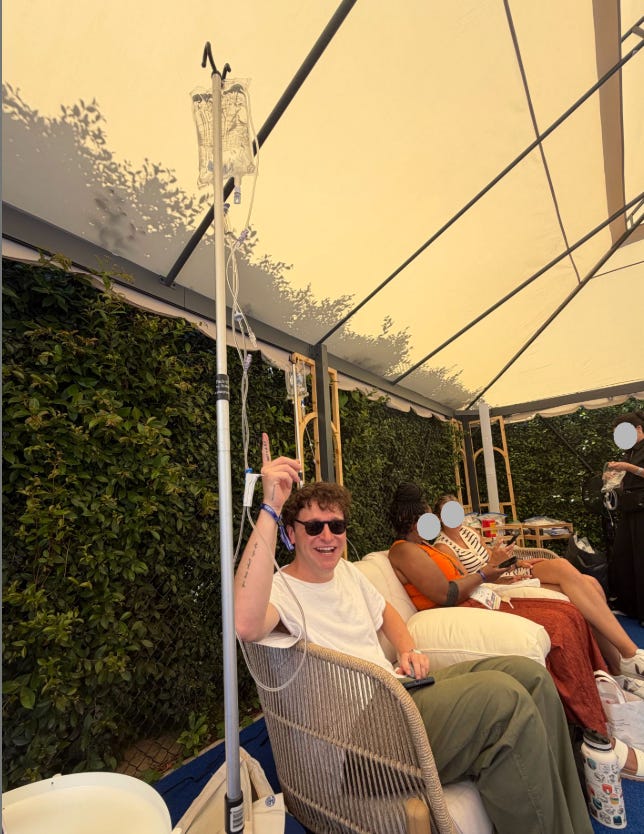
A woman sitting near Reid asked the nurse to take it out because it was stinging. She seemed fine after that. But then the guy opposite us became so unwell that he couldn’t see, and also couldn’t lift his hand to hold a cup of soda when they brought it to him. And through the grapevine last night, I heard some other horror stories: one woman convulsed and someone else’s blood pooled after several attempts to locate a vein. Not good. And bear in mind, this is taking place outside in 98° heat under a tent with a single rotating fan while a club remix of Shakira is playing.
I’ve asked around to see (a) if anyone else has had or heard about similar experiences (b) if the
IV drips are still continuing to happen. But the fact that they’re on offer at all also underscores how the festival’s growth is pushing brands to level up their offerings in order to earn a space on attendees’ agendas—and/or convince them to make the trip to a far-flung villa. I wonder if this is an instance in which the urge to one-up is backfiring to a worrying extent. The body can only take so much in heat and with hangovers like this. — Clara
Call It Fake, Call It Karma (Or, “By the Numbers”)
Cannes instituted new “Global Integrity Standards” for the awards submissions process after AdWeek reported last year that several companies used AI-generated imagery in their casestudy videos and cooked up unverifiable data points. Walking “The Work” up for awards in the Palais this year (I’ve been told there are 8,000 less entrants) it’s been interesting to see these new integrity standards in action.
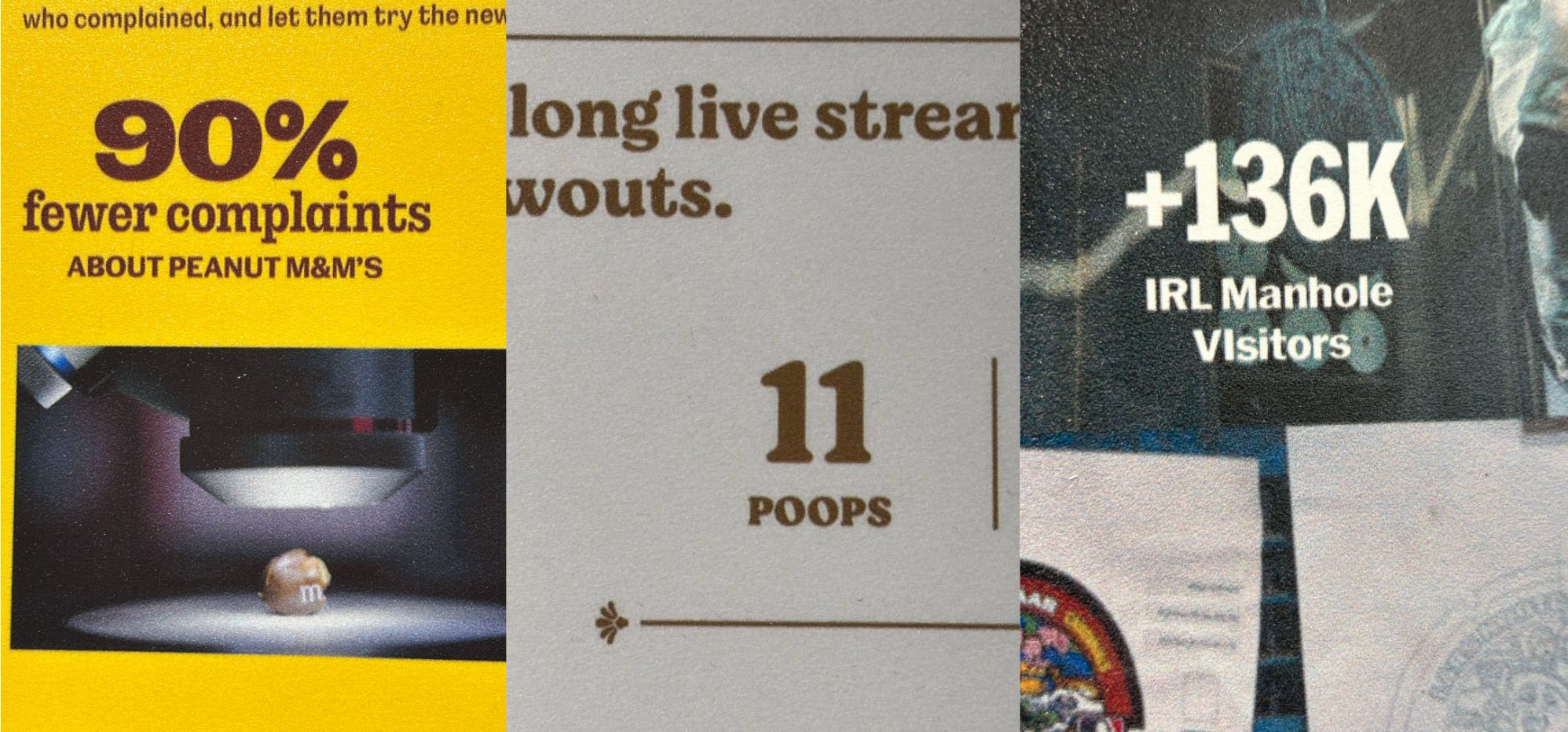
As you can see, brands are getting creative with KPIs. Maybe it’s a lingering sense of anxiety around bloated impressions, or about how the “feed is fake,” or a welcome reckoning with the fact that years of chasing scale and virality isn’t always conducive with sustained cultural equity. — Eli
Cannes vs. Cannes
Last year in Cannes, there was a lot of talk of side hustles from film industry panelists. The Brutalist director Brady Corbet talked about his filters for taking commercial work. Gabrielle Union spoke about turning to brand partnerships to supplement her acting career. White Lotus star Patrick Schwarzenegger said he’s made more money with his VC companies than in Hollywood—makes sense honestly. I go back and forth about whether it’s refreshing or depressing to hear successful people talk about their supplemental income streams. I suppose we are all living in a “wear many hats” world.
But in light of this article from Air Mail’s Alyson Krueger—which points out that more cultural and literal capital seems to be shifting toward Cannes Lions—I’m curious to see if or when we see the trend flow the opposite way, with a more visible presence of creators at Cannes Film in years to come (especially given the success of Jordan Firstman’s film Club Kid and of Kane Parsons’ Backrooms). — Clara
Sky Sports
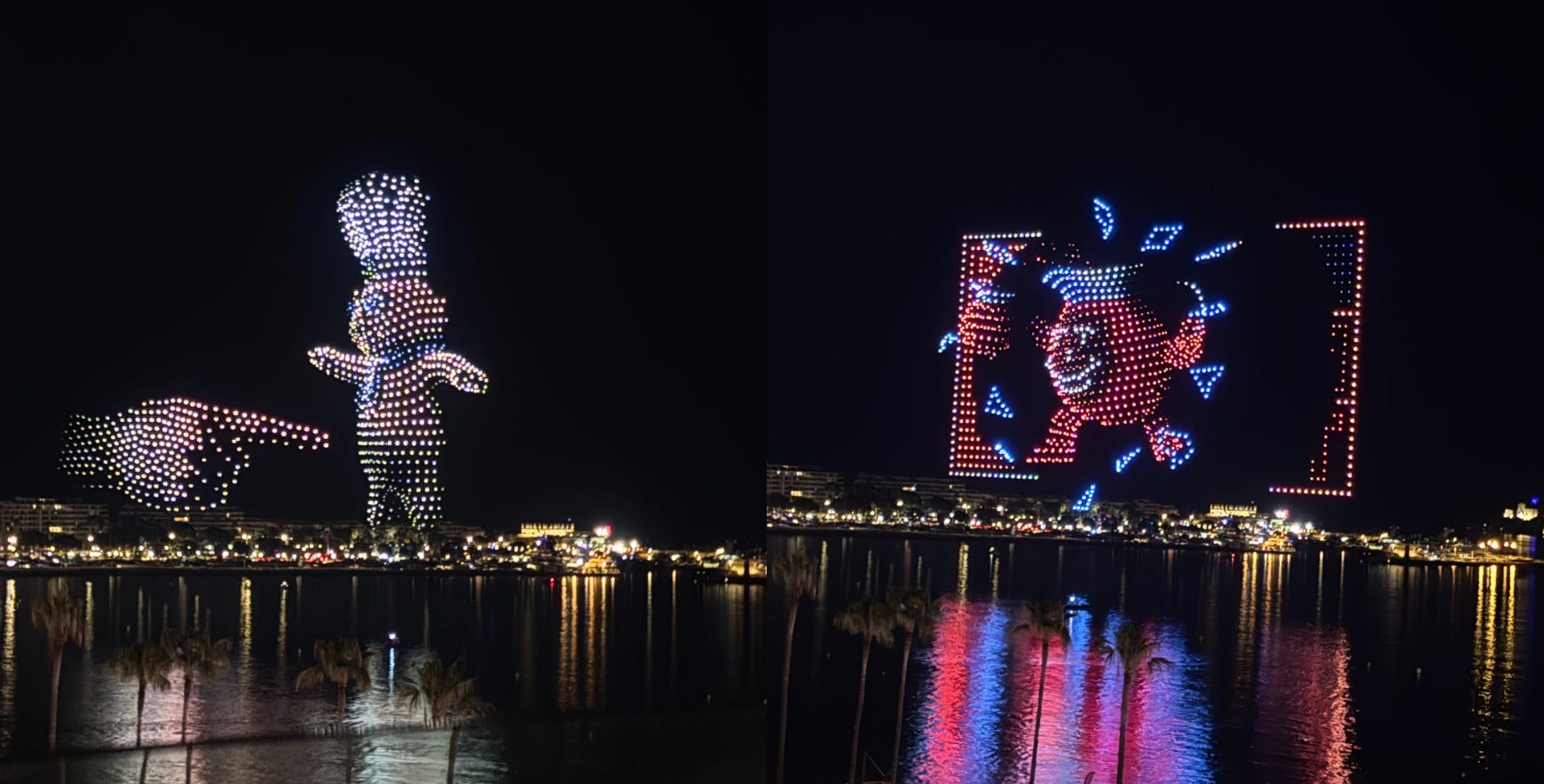
1,500. That’s how many drones were deployed for the whimsical “Sky Stories” drone display last night above the Croisette, featuring an adorable Pillsbury doughboy, the Kool-Aid man, an octopus, a toucan which seemed to be snorting a line of... stars. The show was produced by Nova: the drone entertainment company backed by Elon Musk’s cowboy-hat wearing brother, Kimball Musk and Jeffrey Katzenberg.
I learned of this magic number on a long walk to dinner, where I stumbled upon a cordoned off section of what looked to be 500+ pelican cases. Each let out an eerie whir, like giant mosquitos, or the backing track to a Denis Villeneuve movie. This is what it must be like living by a data center. There were a few security guards lazily watching the boxes, and a production crew sweating through their shirts. “Drawns” someone yelled out, sensing my curiosity. To which I quickly realized they were saying “drones,” in a thick French accent. Ahh, oui. Hats off, gentleman. — Eli
Women in SPAM have a newsletter…it’s called La Fronde
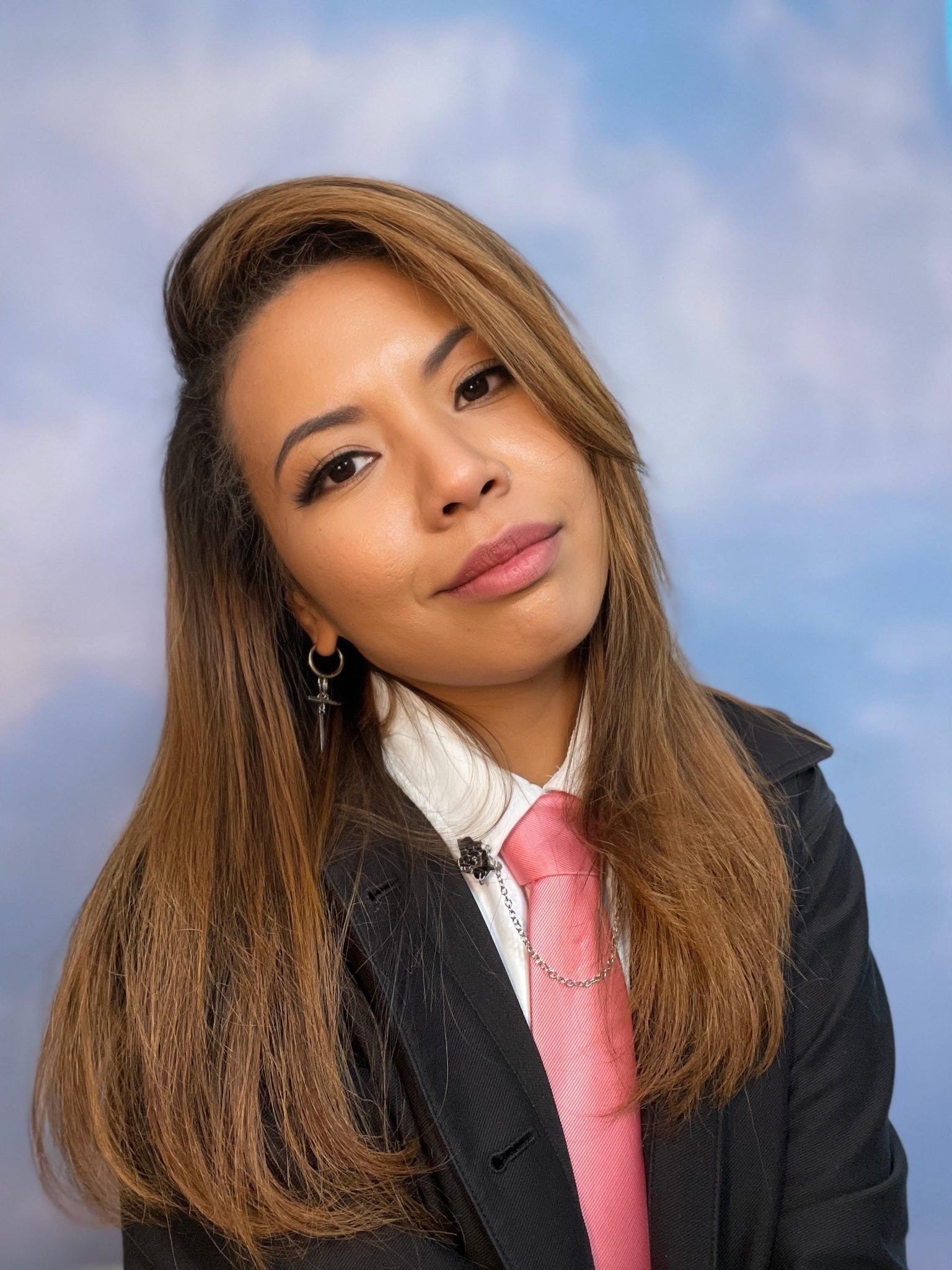
It’s only fitting that La Fronde, a newsletter built for women in media by some of the most iconic in the game has reached 4,000+ subscribers in under one month, right when the internet lended the widely overlooked women in social media, PR, Advertising, and Marketing a nickname. as seen on contributor Eliana spoke with Stephanie Williams, founder and editor of the newsletter and Condé alum about exactly why her subscribers think it’s meeting the moment, and what future media publications need to survive.
Q: La Fronde really feels like a love letter to women in media… when you were building this, what references did you pull from to build the newsletter visually and editorially?
A: When I was a journalist at Washington Post, my beat was covering music, and I really got immersed in the punk music scene there. The history is really interesting because punk music and the whole rock scene tends to be very male-dominated, and what I thought was really cool was the Riot Grrrl era back in the 90s: a response to the fact that the scene was very male-dominated, very male-heavy, there wasn’t a lot of female representation and it was a really great movement that carved out a space for women and eventually women of color to be confident being on stage.
I took inspiration behind that whole movement and the message; traditionally, media tends to be for the most part male-dominated. Most of the voices that do cover this space tend to be men and a lot of the subjects that can be written about are about either male CEOs or you know men who were at the top and talking about things that are high-level business news headlines, so La Fronde was a response to that, especially when it comes to things like like layoffs that are disproportionately geared towards women and people of color.
Q: What is the most interesting observation that someone has either shared with you since starting the newsletter? Where should you be congregating in New York to really understand what’s going on beyond what’s already in the news?
A: When we started, there was a whole announcement by Condé on how they were shutting down the magazine and how people were blindsided by the decision internally. When I was speaking to one of the women who was impacted by that, one of the things she said that caught me off guard, was it’s easy to blame people at the top like a Roger Lynch or an Anna Wintour because they are the most visible people in the company with the highest decision-making power, but it goes more skin-deep than just blaming one person or two.
The notion of layoffs and who gets impacted is systemic at its core: this has been a trend that’s been happening for a long time and in many different newsrooms.
In order for us to really solve that issue, we have to look at more than just who’s at the top, but even down to why people in these groups can get impacted more. Who are the people in charge of making (reporting) assignments? It takes a village for something like this to be solved.
It’s really easy to be chronically online but I think also there’s something to be said about touching grass. It’s more than having moments where you talk, but it’s also about the kinds of things that have to happen afterwards.
Q: How are you planning to expand the community beyond just digitally and also put that action you speak of into practice in real life?
A: We’re planning to host events around the country. I think it’s really important to meet because it’s a different kind of platform compared to just talking in the comments.
We also have a Discord channel for paid subscribers where we talk about what we read in the newsletter: things that we’re seeing and hearing around the industry, and just having a safe space to be able to talk about issues that are happening to women that might not necessarily be as comfortable to bring up in the workplace or anywhere where you’re not quite sure how things are gonna land or how someone’s gonna receive something.
Q: What’s a trend in what media companies are looking for and what do you think the next sexy New York job is?
A: I can tell that a lot of these bigger media companies are taking cues from people on Substack.
I’ve noticed a lot of call-outs looking for people who cover what I cover, like media and power and how everything’s related. You see very similar language of trying to create a “groupchat” and creating a publication that’s centered around that, especially touching on power in New York or DC.
I’ve also noticed a lot of non-media companies are starting to hire for storytellers and I find the way in which those jobs are framed very interesting, because back in the day they weren’t called storytellers. They were ‘editor-in-chief’ or ‘editorial director.’
Calling someone a storyteller is interesting because it creates this nuance: it’s more than just you creating web or digital content, but it expands to things like video and events. It seems like a lot of companies are looking for someone who is a catch-all––you are a storyteller across 500 different things and have to bring kind of that storytelling in a way that’s cohesive and bridges together what the message is.
Q: You publicize media hot takes on the newsletter, and mine is celebrity journalism will be dead in the next 10 years. Would you agree?
A: If we’re talking purely if People Magazine and Us Weekly continue to just do what they’re doing right now, absolutely. With places like People especially, they rely so much on search traffic to give them audience and the more that they do that, the more they’re gonna run the risk of completely losing any semblance of audience because Google is taking away more and more of that share of audience from those publishers and trying to own more of that traffic on its site.
With Google launching AI and making that more of a presence on search, now the search bar is completely changed where it gives you more AI results than it would blue links to publishers. So I do think if they continue the way that they’re continuing, then absolutely they’re probably going to become extinct sooner rather than later.
The solution to that would be to try to partner with creators. There are examples of legacy media working with Substack creators and independent creators on TikTok; I think that’s a good step. At the end of the day, they do need to create their own personalities in order to survive and their (current) model is ‘oh we’ll just aggregate news’.
Q: If you could resurrect any dead media brand, which would it be?
A: I used to read Sassy a lot as a kid and I didn’t realize until much later how ahead of its time that magazine was. Unlike the other teen magazines from the ‘90s, which were either just poster inserts of teen heartthrobs or giving advice on how to snag your crush (which, no shade to them — I still read those too), Sassy was almost like the precursor to Teen Vogue. There were a lot of well-written stories about real issues that teen girls were going through, and they were so ahead of the curb when it came to music — honestly they were the real underdog when it came to discovering obscure indie bands that blew up later on.
I heard some tea that the founder, Jane Pratt, might be bringing it back though! That would be amazing. I feel like after Teen Vogue folded into Vogue there’s no real defining voice online for teen girls and there’s a huge opportunity to fill that gap.
As seen on subscribers can subscribe to La Fronde here.
 | A guest post by
|
 | A guest post by
|
I’ve been enjoying La Fronde!! Love the interview.
Tous Cannes Sammmmmmmmm