

gen alpha's post-algorithm social network
INDUSTRY NOTES #5: Matt Moss, CEO Locket

Good morning and welcome back to as seen on !
Today’s newsletter is the April’s edition of INDUSTRY NOTES, a series where I speak with founders and operators building the products and platforms shaping how we live, spend, and connect.
This week, I spoke with Matt Moss, the founder of Locket — the home screen widget turned social platform that now has over 100 million downloads and 9 million daily active users. If you have a photo of someone you actually care about sitting on your phone screen right now, you’re already familiar.
Locket is one of the more interesting consumer products to come out of the last few years, not because it’s trying to compete with Instagram or TikTok, but because it quietly opts out of everything those platforms have become. Locket has no feed, no algorithm, and no audience. Just a small group of people you’ve chosen, sending each other photos that show up the second you unlock your phone.
In this conversation, we talked why Gen Alpha is skipping traditional social platforms altogether, how Locket thinks about growth without breaking intimacy, and what it means to build a social product thats not algorithmically led, and where he thinks social is going next.
Enjoy!

INDUSTRY NOTES is a monthly interview series where I sit down with Gen Z founders, creators, and operators to explore the most compelling topics at the intersection of business and culture. Think of it as a snapshot of the group chats that inspire this newsletter — conversations with the smartest young people shaping my views on the industries and ideas I love to write about.
Matt, you’ve been building iPhone apps since you were 13 or 14. What’s the throughline in everything you’ve made — and how does Locket fit into that arc?
It’s kind of been all over the map, honestly. I did some projects in high school that were in the gaming and social space. In college, a couple of friends and I built an accessibility tool — Apple had enabled this new technology that let you get a 3D model of a user’s face, which was originally built to power Face ID. We ended up using it to help people who couldn’t touch the screen control it with facial expressions and eye movements, which had its own viral moment on Twitter. Very different from Locket.
But I think the throughline across all of it — from accessibility tech to social media — is that I’ve always been drawn to new technology coming out of Apple every year and trying to jump on it quickly. Be the first one to really think: how does this change something in my personal life? What would I actually want to build with this? Widgets were brand new when I built Locket. The face ID camera was new when we did the accessibility project. iMessage apps were new when I did something before that. It’s always been: here’s a new surface, here’s what I’d do with it.
So walk me through the Locket origin story. How did a birthday present become a company?
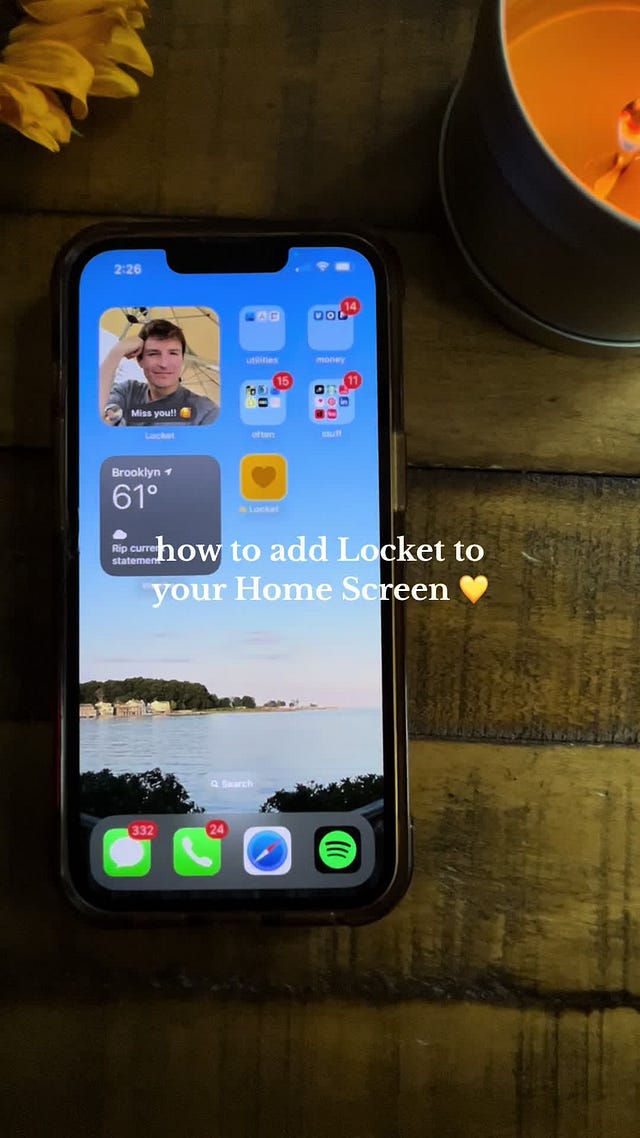
I’d started dating my girlfriend, Ava, during senior year of college, and when I graduated, she stayed in our college town while I moved up to the Bay Area. First time going long distance. I originally just built Locket as this fun way for the two of us to stay connected — the core concept is a widget that lives on your home screen, your friend sends a photo, you open your phone and it’s just there waiting for you.
Built the first version in about two weeks and gave it to Ava as a birthday present. We spent the next six months just using it, the two of us, sending photos back and forth every day. It felt so much more genuine than iMessage or anything else. And I think the real signal for me was that Ava was using it every day. When you’ve built as many things as I had by that point, you know that’s rare. That’s when I thought there might be something bigger here.
We launched on New Year’s Day 2022. Mainly driven by TikTok — went from probably 20 people testing it to a few million signups in the first month. And that’s when we started realizing: this isn’t just about long distance couples. It’s about something everyone’s feeling. People are tired of what social media has become. It doesn’t feel like it’s about connecting with the people you care about anymore.
“When you find something you’re using every single day — and Ava was using it every single day — that felt like, okay, she must actually like this.”
You were freshly graduated, basically unemployed. How did you decide this was the thing?
Those decisions kind of got made for us. Because of the momentum from day one, the questions around — should this be full time? Should we raise money? — were almost answered before I had to ask them. There was so much momentum that it would have been such a missed opportunity not to go after it. I was in a lucky spot: just graduated, had a little time on my hands. It felt way more organic than sitting down and deciding to start a company in the social media space. Build out of curiosity, see what happens, and then all those other steps follow naturally once the traction is already there.
 Tiktok failed to load.
Enable 3rd party cookies or use another browser
THE FIRST POST-ALGORITHM GENERATION
Paint me a picture of the Locket user right now — because I know it’s shifted significantly.
We really started with Gen Z as our bread and butter — college kids, high school age, people who were fatigued from scrolling, fatigued from not actually seeing their friends’ content, fatigued from the pressure of posting to an audience that’s judging you. That was our core.
What’s been interesting is watching the next generation start to come up. Gen Alpha — the older end is just getting to high school age now, using social media for the first time, wanting to stay in touch with friends outside of school. That’s where we’ve seen the most exciting growth over the last year. And what feels different about them is that where Gen Z might have used Locket as a companion app alongside Instagram or Snapchat, a lot of these younger users are using Locket as their primary way to stay in touch with friends. They’re actually leaving behind the social platforms that previous generations used. For us, that’s the most exciting thing happening right now.
What does it mean to you that the generation that grew up watching Gen Z get destroyed by social media is now choosing something completely different? Is that a cultural shift or a product shift — and does Locket deserve credit for it, or did you just get the timing right?
I think this really comes down to a shift in the culture. When I was a teenager back in the 2010s, social media was new and nobody really thought twice about using it. Now, teenagers are growing up in a world where the pitfalls of social media are well understood, so they think about it differently from day one. And it isn’t just teenagers, everyone from parents to lawmakers are taking a much closer look at how these apps impact teens. I think pretty much anyone you talk to would express similar feelings — I’d guess if you think about how your own views of social media have changed in the last 10 years, the answer is a lot.
When it comes to Locket, whenever a product takes off so quickly, it’s an example of culture and product meeting in the middle. Clearly these feelings were already bubbling up in the world. Locket was lucky to come along at a time when our product was perfectly suited to address many of the things people were tired of with other social apps. Another thing that we’ve learned is that although people are pretty tired of social media, they still want ways to connect with friends. If you’re a teenager, being able to chat with your friends and share fun memories has a ton of positive value. Where Locket really fits in is giving people a lot of these benefits, but without many of the downsides that come along with other platforms.
THE SOCIAL MEDIA RECKONING
There’s so much happening right now — governments banning social media for younger people, court cases, the whole backlash. Do you see that as an opportunity, and how are you thinking about Locket’s position in that moment?
First and foremost, I think everyone’s pretty on the same page that young people genuinely want to connect with their friends and express themselves. That’s a healthy thing. What people are really reacting to is how far so much of what happens on social media has gotten from that. You’re spending as much time as possible scrolling feeds. You’re posting things to thousands of people — which is so different from any form of communication that’s ever existed. And a lot of those things just feel pretty negative.
We ended up in a lucky position from the start because Locket was always focused on something very different. No algorithmic feed. No public content. You’re sharing with the 10 or 20 people you’ve actually chosen to keep close. So it’s very natural that as other platforms realize the traditional model doesn’t work as well for younger people anymore, Locket slots in as the place that’s always been about genuine connection. I think more and more people will find their way here — healthier, more real. It feels like the world is catching up to what we’ve been building.
“As soon as a Gen Alpha person sees promotion, they’re immediately a little turned off. They want something that feels authentic. That’s changed everything about how brands have to show up.”
The tension I keep coming back to is this: Locket’s entire appeal is that it’s private and low-pressure. But growth and intimacy are somewhat at odds with each other — BeReal couldn’t figure that out. How do you
This is definitely the number one question we’ve gotten since Locket first launched. So far, this hasn’t been as big of a tradeoff as people suggest. A lot of how Locket grows is word-of-mouth, and that’s still super powerful even if people only add 20 friends on the app. In some of our most mature markets internationally, Locket has been able to spread to a high percentage of Gen Z and Gen Alpha while the average friend count on the app remains much lower than other social platforms, which makes us think this is doable in more countries as well.
I think the biggest challenge to growth in the long run is actually keeping the product fresh and exciting, rather than the close friends focus. For apps that have reached scale and then not been able to maintain it, I think it comes down to the product not evolving fast enough more so than the focus on intimacy. That’s what tends to kill consumer apps more than anything else.
THE FUTURE OF BRAND MARKETING IS PRIVATE
A lot of my readers are in brand and marketing. They’re all trying to figure out how to reach Gen Alpha. How do you make brand partnerships work on a platform where the entire value proposition is authenticity?
More and more over the last year, brands are trying to figure out how to connect with this next generation, and a lot of what worked before just doesn’t land the same way. As soon as a Gen Alpha person sees promotion, they’re immediately a little turned off. They want something that feels authentic. So we’re starting to become the place where, if a brand wants to reach millions of teenagers and college kids in the US in a way that actually works, they think of Locket.
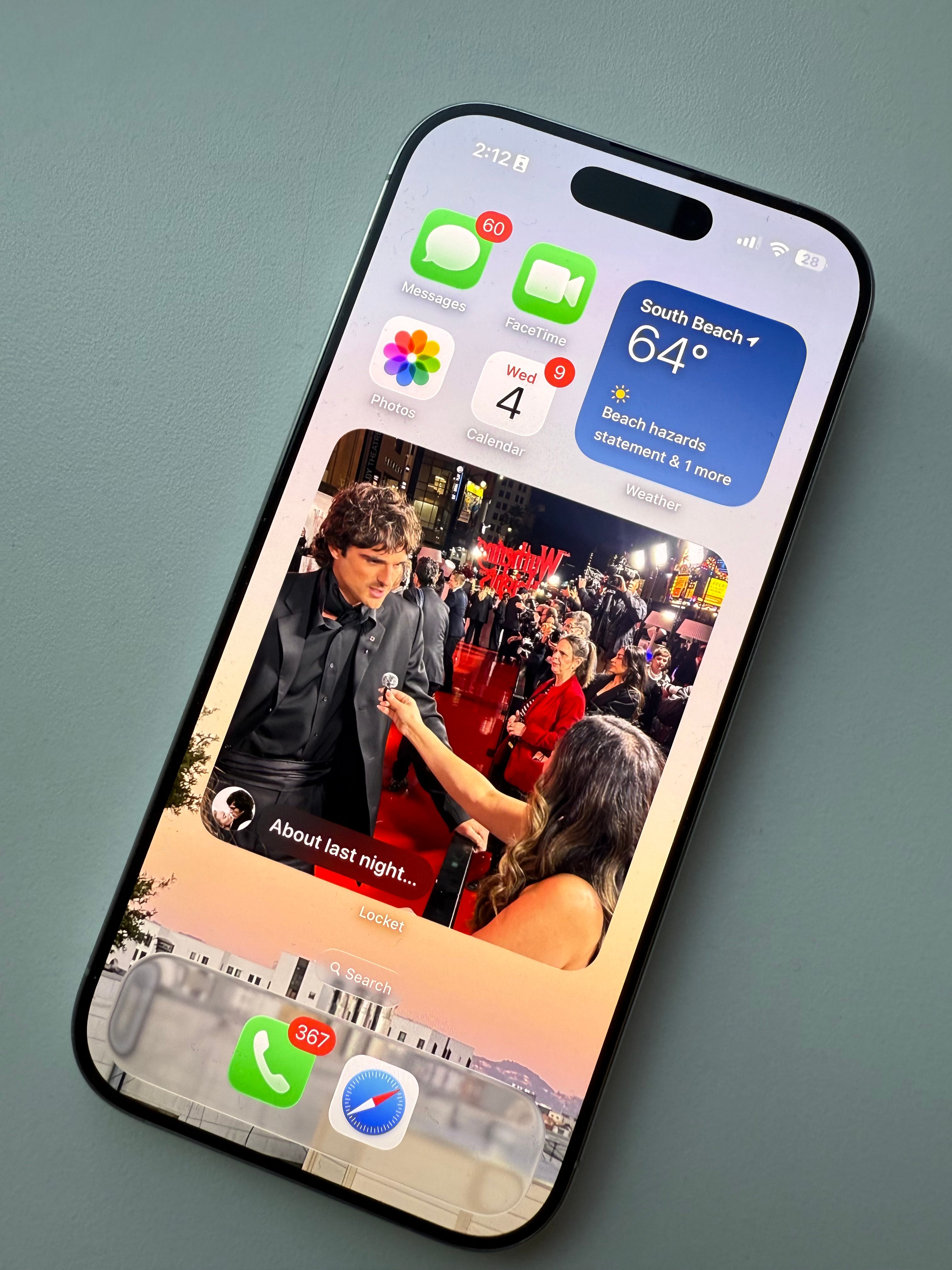
The best example recently was our partnership with Warner Bros. for the Wuthering Heights movie. Part one was letting them share content that felt totally natural to the platform — behind-the-scenes content while they were touring the film, so you’d get a selfie video from Margot Robbie popping up on your home screen. Which is just something you don’t get anywhere else. Part two was filters that let you dress up as a character from the movie. The technology has gotten so good — you actually look like you’re in the film. People were sharing that content with their friends constantly.
So it’s two things: authentic content that feels native to the platform, and giving people a new way to express themselves with friends. That makes so much more of an impact for a partner than anything you’d do on a traditional social platform — because the users actually love it.
Where’s the line for you? What’s a brand partnership you’d turn down — and has anyone ever asked you to do something that felt like it would
The question we always ask is if the brand partnership is something that would be genuinely fun for the person using it on the other end. We only want to grow these partnerships in a way where users are excited about them, and in reality, that’s the only way these partnerships are actually beneficial for the brands as well. Looking ahead, behind the scenes content and filters from musicians, TV shows, and movies that our users already know and love feel like experiences that make Locket as a whole better and more fun. But outside of these partnerships, we’ve certainly had many brands approach us that feel more like “promotion” than “special feature” which we’ve turned down.
INDUSTRY HOT TAKE
Last question — and this is the closer for the piece. What’s your prediction for where social media goes in the next three years, and where does Locket fit in that future?
My prediction is the next generation of teens will use a totally different set of platforms than the last generation. It’s been quite a while since a big social media platform shift happened, but all of the trends we talked about earlier — teens being tired of endless scrolling, pressure to post, negativity, parental concerns, etc — are just getting so strong at this point. It feels pretty inevitable that this will lead to big changes in how people use their phones and social media. For Locket, if we’re lucky enough and keep our focus on building the right product, we can be a big part of what folks end up using instead.
Great letter! The idea of going to a more private social media, bts experience makes me curious about trying this app.