



Hello and welcome back to as seen on !
In today’s edition, SocialGlass founder and newsletter contributor Maxine Marcus returns with you are what you scroll, her recurring column exploring what Gen Z is actually watching, sharing, and obsessing over online—and what it tells us about culture more broadly.
YOU ARE WHAT YOU EAT SCROLL
Hi everyone! First, I heard y’all loved the last edition of this column. So many friends sent it to me that I think it might have been my first viral moment since launching SocialGlass. I love writing these, so keep the feedback coming!
A quick refresher: we’re exploring how monoculture is evolving to a new definition as consumers share less cultural context and fewer media channels. Instead, shared culture shows up through recurring content formats, creators, fandoms, and references expressing the same underlying desires, tensions, and behaviors.
I analyzed the social feeds of 100 Gen Zers to see which tensions and behaviors were showing up across otherwise very different feeds. Here are the top 5 (plus some specific corners of the internet).
For today’s column, we looked at the highest-signal likes, saves, and shares from the past six months across the social feeds of 100 Gen Zers, ages 18–28, spanning 46 states and interests from beauty and gaming to sports and everything in between.
1. Kalshi’s ads are becoming part of the feed, and so is the backlash.

Kalshi has become difficult to avoid. Its sponsored content appeared in the watch histories of 47% of the cohort we analyzed, reaching more of our sample than any other brand campaign we reviewed. The strategy is clear: rather than relying on one advertising format, Kalshi adapts its pitch to the language of different communities, from football fans to reality-TV obsessives. But the same saturation that makes the brand recognizable is also generating backlash.
Kalshi promotional posts appeared across 47% of our cohorts watch history, a dominant spread of reach for sponsored content.
Across different feeds, this looks like:
Turning fan frustration into a promotion. A Cowboys fan rants about driving nine hours to watch her team lose, while Kalshi markets appear over the interview. The emotional payoff is already there. The brand attaches itself to it. This same post appeared in eight senders’ exports.
Making a prediction market part of an identity joke. “Would you rather have a football son or a DWTS daughter?” starts as a familiar hypothetical, then cuts to a Dancing with the Stars market and a $200 purchase screen. Six senders captured the post. Sports and reality television become different entry points into the same product.
Building the pitch into the argument. A creator mocks a large position on C.J. Stroud winning NFL MVP, debates other contenders, then invites viewers to trade their own opinion. Having a take becomes the setup for using Kalshi.
The only Kalshi-related post with a recorded repost was the complaint about seeing too many of them. This creator declares “Kalshi must be stopped”, complaining about relentless promotions and saying that selecting “not interested” hasn’t helped.
I think this tension underscores a classic point of contention for modern-day growth teams: when a brand learns the language of several communities, it can enter all of them. But as reach accumulates, viewers start to feel encroached on, their spaces disrupted. Is it working? Kalshi is clearly getting into these feeds. Whether that attention becomes customers remains unanswered. The cost already visible is that the brand is becoming recognizable for the frequency of its advertising, too.
2. Gen Z can’t afford to be who they really are

Nearly 15% of our TikTok export cohort, reposted at least one post about money pressure, spending, or affording desired experiences.
A top re-post says “I can’t wait to financially afford who I truly am.” (Search this on TikTok, and you’ll see a tonnn of posts with this exact hook).
It’s no secret that Gen Z is massively overexposed to what other people have online. Everyone knows their taste (or thinks they do), has a very specific vision of the life they want, and is constantly confronted with the gap between that vision and their bank balance. These posts are funny, but they get at a deeper tension: what happens when your sense of identity becomes inseparable from the things you can’t afford?
That looked like these reposts:
Insisting you’re only an introvert because you’re underfunded, calling himself the “budget version.”
There is a lot that can be said on this topic. The psychology of what we should have is likely one of the top impacts of social has had on generations who grew up online. It’s intrinsic to culture to now “want” things. Not just in private, but in the most public, “identity-tethered” form: reposts.
3. Meanwhile, in other corners of the internet...
One of my favorite things about analyzing people’s feeds is discovering the oddly specific corners of the internet that exist just outside my own algorithm. Here are a few that caught my attention this month, along with the audiences they’re reaching.
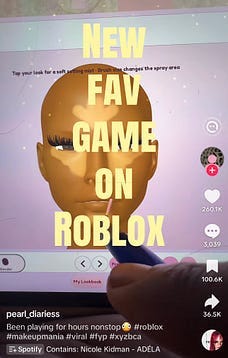
Beauty gaming, for the beauty girl. Makeup Mania on Roblox lets players apply lashes, blush, and lipstick to an avatar. The creator says she’s been playing for hours. A beauty tutorial you can actually play.
For who? A 24-year-old beauty and fashion fan who doesn’t list gaming among her interests, but scrolls custom handbag building, thrift flips, and DIY room makeovers.
Bag charms + homemade accessories. A crocheted AirPods pouch doubles as a charm, while a sponsored Crocs x Touchland sanitizer holder gets decorated with Jibbitz. Everyday essentials become part of the bag’s outfit.
For who? Women ages 23–26 whose feeds approach accessories through beauty and styling, or hands-on crafts like tiny handmade doll charms.
S’mores dip, but make it seals. An Oreo s’mores recipe turns toasted marshmallows into little seals. The comments alternate between asking for instructions and mock outrage: “YOU KILLED HIMMMM.”
For who? A 20-year-old beauty fan whose feed mixes K-beauty, K-pop, anime, and cute Studio Ghibli creatures.
Men’s fragrance is showing up in body-butter form. Dark-vanilla body butter and matching oil, plus “cologne in body wash form”. Smelling good gets pitched as an entire body-care routine.
For who? A 22-year-old male beauty and fashion fan whose feed includes skincare, hair products, and Pinterest outfit recreations.
Pokémon collecting gets a paleontology niche. A card binder organized by geological eras groups fossil Pokémon, prehistoric creatures, and artwork featuring ruins. A very specific way to curate a collection.
For who? A 23-year-old male gamer whose feed also contains fossil hunting, beachcombing, and Nintendo nostalgia.
Saving money gets the sticker-and-ASMR treatment. A dental-school savings challenge uses pink cash envelopes, Squishmallows stickers, and a LoveShackFancy bag. A serious financial goal, packaged as a tactile little ritual.
For who? A 19-year-old woman whose feed combines budgeting advice and aesthetic routines with beauty, fashion, food, and tech.
4. What “makes it out of the group chat?” Weird, quirky, ridiculous, hilarious themed-plans.
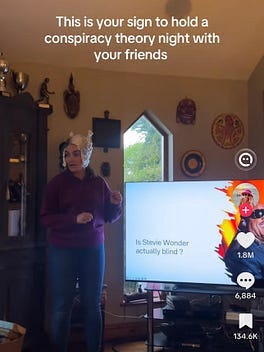
Across the feeds we analyzed, one thing kept showing up: increasingly elaborate excuses to hang out with your friends. In fact, activity- and theme-led hangouts appeared across 50% of our cohort’s likes, saves, and shares. Think conspiracy-theory nights, competitive slime decorating, themed potlucks, and craft sessions devoted to dressing up plush rats. The more specific and ridiculous the premise, the better.
That looked like:
Conspiracy-theory night, foil hats required. Friends present their theories to each other, including a slide asking, “What are my friends really doing when they go to work?”
“Wine and mine” night. Friends pair Minecraft with wine and a full charcuterie spread. The comments immediately build on the idea: “Winecraft,” plus requests for Roblox and Wizard101 versions.
Slime, but make it competitive. Two friends turn cake-themed slime kits into a decorating contest, piping “frosting,” adding sprinkles, and comparing their creations.
A pasta competition with a very specific prize. Everyone brings a sauce, the group judges the entries, and the winner gets pesto made by the host’s mom in Genoa.
Everyone brings something from the kids’ menu. A potluck features dinosaur nuggets, Capri Suns, pizza rolls, and mini corn dogs. Each guest introduces their contribution, served on character plates.
Hide-and-seek with almost nowhere to hide. Friends play in a tiny NYC apartment, squeezing into a closet and disappearing beneath the bedding.
Decorating plush rats. Yes, rats. A craft class gives them witch outfits, ruffled collars, and elaborate accessories. One finished rat sits in a hot-dog tray.
Squishy-making, catered by Taco Bell. An RA supplies beads, colorful fillings, and squishy skins for a campus event. The creator says supplies ran out in ten minutes.
I’ve written before about young people creating fun out of nothing, and I think these hangouts are a perfect example. The premise doesn’t need to be impressive or even particularly interesting to anyone outside the group. That’s almost the point. Come up with something ridiculous, commit to the bit, and make an evening of it.
There’s a lesson here for brands investing in IRL experiences: not every activation needs to be polished, aspirational, or aesthetically perfect. Sometimes the best way to bring people together is to give them something silly to do.
5. Creative corner: The ads that actually understand the internet
Ocean Spray is having creators come to the Cranberry Bog: We’ve seen multiple UGC posts of creators dancing / vibing in the bog. Its a fun & unique IRL experience tethered to the brand. Great example of leveraging unique brand assets to create differentiated content & reaach feeds.
Comments call out how the posts emulate Ocean Spray ads: “The fact that it looks exactly like the commercials is mind kind of a mind f so cool”
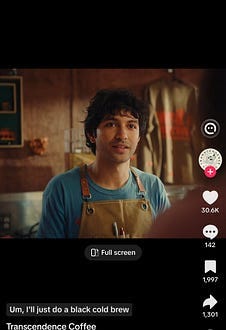
Transcendence Coffee: the right references, and right execution.
This ad wins because it knows the conversations happening around coffee (specific to their audience in NYC): “annoying NYC transplants,” black cold brew as a personality, and disdain for “syrupy-ass coffee.”Comments call the production “money well spent,” and another says, “I just bought 4 syrups.”
Verizon × Christopher Briney: they understood yearning culture.
The Summer I Turned Pretty is a major pillar of online yearning, and we’ve been seeing fan-edits of the show in SocialGlass consistently popping up since last summer. Verizon taps that existing obsession, giving Christopher Briney the longing, beach-running treatment fans already associate with Conrad.The comments immediately speak the fandom’s language: “one thing bout Connie he gonna wait.”
Reformation × Alexa Chung × @foraysdiary: amazing creator identification.
Jasmine McBride, @foraysdiary, is building a niche around split-screen journaling. Reformation recognized how well she resonates with its audience. That fit tracks with what we’ve seen in Social Glass, where @foraysdiary has surfaced multiple times among female fashion-forward Gen Z cohorts.The comments: “love the words” and “Neeeeed your outfit.”
The common thread? These brands aren’t trying to invent a cultural conversation. They’re finding one their audience is already having and figuring out how to participate in it.
If you want to learn more, reach out at maxine@socialglass.ai
Methodology & More About Me

What is SocialGlass? The methodology behind this column
SocialGlass is a social & cultural intelligence company that analyzes posts real people in specific audiences are engaging with in real time, straight from their feeds. Think of us as a microscope into relevant social spheres at scale.
“Sometimes the best way to bring people together is to give them something silly to do.”
would love to see more silliness from brands.
The way kalshi has been accepted into life/society as a normal thing is insane. The founder basically admits it’s ripe for insider trading